Dry Ice Blasting: The Safe & Modern Solution for Industrial Cleaning
Dry Ice Blasting is one of the cleanest ways to strip dirt, grease, soot, and coatings from industrial surfaces without soaking your site or grinding it to bits. It works. It’s fast. And done properly, it reduces mess, downtime, and damage risk compared to many old-school methods. Most “cleaning” on industrial jobs is really controlled destruction. Sanding, scraping, wire brushing, chemical stripping, aggressive pressure washing. They all have a place, but they also bring headaches. Water gets into panels and bearings. Abrasives chew up finishes and tolerances. Chemicals leave residues, trigger COSHH issues, and create disposal problems.
Dry Ice Blasting and Dry Ice Cleaning sit in a different category. It’s a Chemical Free Cleaning Method that can be genuinely Non Abrasive Cleaning on many substrates, while still shifting stubborn contamination. That’s why you’ll see Industrial Dry Ice Blasting used in food plants, factories, power stations, print works, packaging lines, and restoration projects.
What Dry Ice Blasting actually is
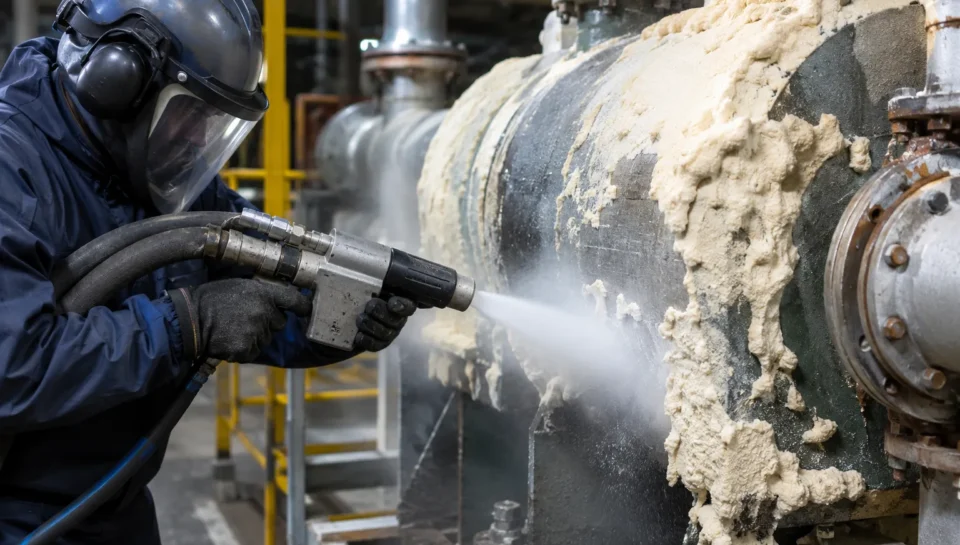
Dry Ice Blasting uses pellets of solid CO2 as the blasting media. The pellets hit the surface, do the cleaning work, then sublimate. That means they turn straight from solid to gas. No liquid stage. No soggy slurry left behind. That single detail changes the job.
With Dry Ice Blast Cleaning, you’re not dragging tonnes of wet waste across a live site. You’re not forcing water into electricity. You’re not embedding grit into machinery. You’re also not relying on harsh solvents to dissolve everything. Dry Ice Cleaning is still a blasting process, so it needs skill and control. But it’s a different kind of control. You’re tuning air pressure, pellet feed, nozzle choice, stand-off distance, and angle. The aim is targeted Industrial Surface Cleaning with minimal collateral damage.
Why UK sites are moving toward Dry Ice Blasting
Cost is one reason. Downtime is the big one. If you run a factory line, a day offline can cost more than the cleaning itself. If you manage a plant room, you don’t want water anywhere near MCC panels. If you’re dealing with fire soot, you don’t want abrasive grit pushing contamination deeper into pores.
Dry Ice Blasting UK demand has grown because it can often cut the “clean, dry, rebuild” cycle down to “clean and restart”. It also helps with access. Dry Ice Blasting Equipment can be used in tight zones where bringing in wet blasting kit and bunting is a nightmare. You still need ventilation planning and good housekeeping, but the site set-up can be simpler. Dry Ice Blasting and Dry Ice Cleaning also sit well with modern compliance expectations. Less chemical use. Less secondary waste. Fewer surprises during strip-down.
The Dry Ice Cleaning Process, step by step
A good operator doesn’t just turn up and start blasting.
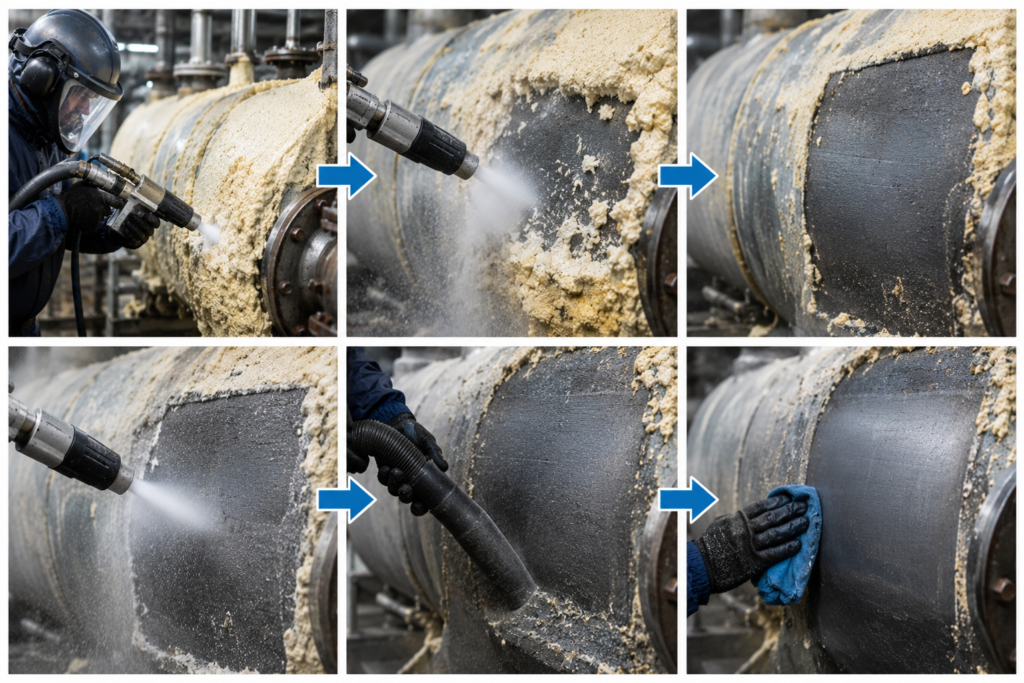
1) Survey and test patch
The team checks the substrate, the contamination type, and what “clean” actually means for your asset. A turbine casing is not the same as a timber beam. A coated machine guard is not the same as a soot-stained brick wall. A test patch matters. It shows cleaning speed, finish, and any risk areas.
2) Set containment and extraction
Dry ice becomes CO2 gas. That’s normal, but it still needs control.
You plan airflow, extraction, and monitoring where required. You manage debris that gets lifted off the surface. You protect sensitive components and set exclusion zones. If you want a UK reference point for controlling hazardous substances and planning safe work, HSE guidance is the right place to start:
3) Dial in the blast settings
This is where experience shows.
Industrial Dry Ice Blasting can be gentle or aggressive depending on settings. Higher pressure and harder pellets can shift thicker contamination, but you don’t want to mark soft substrates or lift sound coatings you need to keep.
4) Clean in a logical sequence
On Machinery Cleaning Services, you work top-down and inside-out where practical. You protect bearings, sensors, and electrics as needed. You avoid blasting debris into areas that are hard to remove later. On Fire Damage Dry Ice Cleaning, you work from least contaminated zones to worst, to reduce cross-contamination. You also plan odour control and post-clean verification.
5) Inspect and sign off
Good Commercial Dry Ice Cleaning includes evidence. Photos, spot checks, and practical acceptance standards. If the client needs validation for hygiene or quality systems, that gets planned upfront.
Dry Ice Cleaning vs other methods
Dry Ice Blasting is not magic. It’s a tool. Here’s where it usually wins, and where it doesn’t.
Where Dry Ice Blasting often beats wet blasting and chemicals
Less moisture risk. Big deal on electrical-heavy environments. Less secondary waste. You mainly collect what comes off the surface. Lower abrasion risk on many surfaces. That matters for labels, finishes, and sensitive housings. Faster restart in many settings. Especially on production lines.
Where other methods can be better
If you need heavy profile creation on steel for a new coating system, abrasive blasting may be the correct spec. If you have thick elastomeric coatings across huge areas, a hybrid approach might be more efficient. If access is poor and ventilation cannot be managed, you may need a different plan. A decent contractor will say this clearly. They won’t force Dry Ice Blasting onto every job.
Industrial applications that suit Dry Ice Blasting
Dry Ice Cleaning for Factories is common for one simple reason. You can clean in place. Conveyors, printers, packaging machines, moulds, vats, and frames can often be cleaned without full strip-down. That can save days. In some plants, it saves weeks. Industrial Dry Ice Blasting is also used around food-grade environments, but you still have to control debris and follow hygiene protocols. “No chemicals” does not mean “no controls”.
Machinery Cleaning Services without grit contamination
If you’ve ever dealt with abrasive media near bearings, you know the risk. Dry Ice Blast Cleaning reduces that risk because you’re not firing grit that can lodge in seals. You still get dislodged contamination, of course, and you still need protection and clean-down. But you’re not adding a second contaminant. This is a big reason CO2 Blasting Services get specified for motors, gear housings, presses, and electrical cabinets.
Fire Damage Dry Ice Cleaning and restoration work
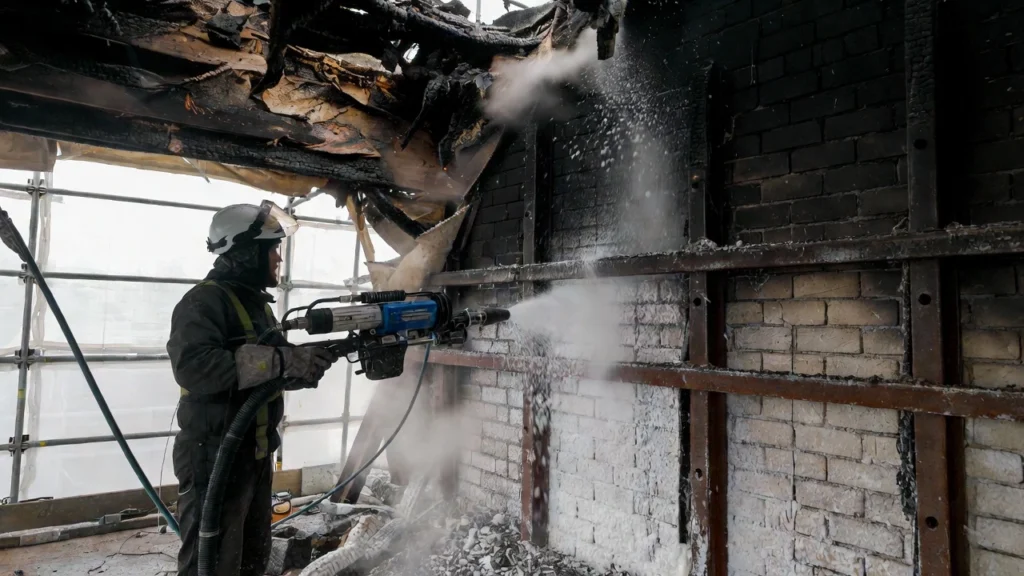
Soot is nasty. It stains. It smells. It gets into pores. Fire Damage Dry Ice Cleaning works well because it can lift soot without driving water into already damaged materials. It also avoids some of the residue problems that come with heavy chemical use. Industrial Restoration Cleaning often uses Dry Ice Cleaning alongside other steps like odour sealing, HEPA vacuuming, and targeted chemical treatment where needed. Dry Ice Blasting is a strong first strike, not always the full job by itself.
Dry Ice Blasting for wood, beams, and sensitive substrates
Dry Ice Blasting for Wood is popular for heritage and restoration, but it needs a careful hand. Wood can fuzz. Soft grain can lift. Paint layers can behave unpredictably. A skilled operator uses lower pressure and controlled technique, then checks surface condition as they go. If you want timber cleaned without drowning it or sanding away character, Dry Ice Cleaning can be a good route. It can remove grime, soot, and some coatings while keeping the underlying profile intact.
The kit that matters, and why operators matter more
A Dry Ice Cleaning Machine is basically a delivery system. It controls pellet feed, air flow, and consistency. The nozzle choice and air supply matter a lot too. Dry Ice Blasting Equipment is only half the story though.
The operator decides:
- How aggressive the blast is
- How close to work
- How to protect nearby assets
- How to manage CO2 build-up risk
- How to collect and dispose of debris
That’s why “cheap blasting” often ends up expensive. It’s not the media that damages things most of the time. It’s poor control. If you’re buying Dry Ice Blasting Services, ask how they manage ventilation, monitoring, and exclusion zones. Ask what surfaces they’ve cleaned that match yours. Ask for a test patch plan.
Short answer. Competence matters more than the machine.
Is Dry Ice Blasting eco friendly
Eco Friendly Industrial Cleaning is not a slogan. It needs specifics. Dry Ice Blasting uses CO2, but most dry ice used for cleaning is made from recovered CO2 from other industrial processes. It’s not typically produced by generating new CO2 just for blasting. The bigger environmental benefit on many sites is the reduction in chemical use, water use, and contaminated run-off.
That said, you still use compressed air and power. You still generate waste from whatever you remove. You still need proper disposal. So yes, Dry Ice Blasting can support Eco Friendly Industrial Cleaning goals, but only if the job is planned well and waste is managed properly.
Safety and compliance on UK jobs
Dry Ice Blasting is safer than many alternatives in the right hands. It’s still not “risk free”.
Key UK realities:
CO2 can displace oxygen in poorly ventilated areas.
Noise can be high. Hearing protection often applies.
Dislodged coatings can contain hazardous substances. You must assess this.
Manual handling and hose management still create trip and strain risks.
Safe Industrial Cleaning Methods start with a proper survey and risk assessment. If you suspect hazardous coatings, you test. If you’re cleaning in confined zones, you plan ventilation and monitoring. If you’re working around electrics, you isolate and protect. This is where professional Industrial Dry Ice Blasting separates itself from a “guy with a blaster”.
Dry Ice Blasting Services for property and construction related work
Even if your main business is property work, Dry Ice Blasting can be relevant.
Plant rooms in large residential blocks.
Boiler houses.
Car parks with smoke damage.
Timber structures needing gentle cleaning.
Masonry contaminated with soot or oily residues.
If you’re a homeowner dealing with contamination after a leak, smoke event, or poor previous work, Dry Ice Cleaning can be a clean way to reset surfaces before refurbishment. It helps you see what’s really going on underneath.
Service CTAs you can use on related jobs
If you’re on Smart Spray Foam Removal because your property has spray foam problems, don’t ignore the knock-on work. Removal is one part. Making the structure safe and mortgage-friendly is the outcome. If you need spray foam insulation removal from rafters or roof timbers, push for a method that avoids soaking the roof structure. You want clean, dry timber and clear visibility for inspection.
If you need residue removal after foam comes off, Dry Ice Blasting can help strip remaining adhesive and contamination from timber and awkward details without heavy sanding in tight loft spaces. If you need full project support from a specialist removal contractor, check Elite Spray Foam Insulation Removal for service-led help across different property types, including advice-led site work and structured removal planning.
Dry Ice Blasting and Dry Ice Cleaning, where it fits best
Dry Ice Blasting and Dry Ice Cleaning fit best where you need control, speed, and low mess.
It’s ideal for live environments.
It’s strong for machinery.
It’s useful for restoration.
It can be excellent for timber, with the right settings.
It’s not a one-size solution. A straight-talking contractor will tell you when another method is better.
FAQ
Is Dry Ice Blasting safe inside a building?
Dry Ice Blasting can be safe indoors if ventilation and CO2 control are planned. The key risk is CO2 build-up in poorly ventilated zones. A proper contractor plans airflow, monitoring where needed, and safe working limits.
Will Dry Ice Cleaning damage timber or brick?
Dry Ice Cleaning is often Non Abrasive Cleaning on many surfaces, but settings matter. Timber can fuzz if blasted too aggressively. Brick can clean well, but weak mortar may shed. A test patch is the sensible starting point.
Does Dry Ice Blast Cleaning leave any residue?
The dry ice itself does not leave residue because it turns to gas. You still need to collect what gets removed, like soot, grease, paint flakes, or insulation debris. That waste handling is part of the job.
Can Dry Ice Blasting remove spray foam residue?
Dry Ice Blasting can help remove residual foam and adhesive from timber and awkward details, especially where sanding would gouge the surface. Results depend on foam type, age, and how it bonded. Expect a test patch and a realistic finish standard.
Is Dry Ice Blasting noisy?
Yes, it can be. Noise depends on air pressure, nozzle type, and the space. Hearing protection is common on Industrial Dry Ice Blasting jobs.
How much mess should I expect?
Less mess than wet blasting or abrasive blasting in most cases. Commercial Dry Ice Cleaning still produces debris from the contamination you remove. A good team uses extraction, sheeting where needed, and clean-down steps to keep the site controlled.
Can Dry Ice Blasting be used on electrical equipment?
It can be used around electrical equipment and panels when isolation, protection, and method control are in place. It’s often chosen because it avoids water. It still requires careful planning to prevent debris ingress and to keep safety standards tight.